Blog | 22.5.2026
However, the returns are no longer generated from a single market. Instead, they are increasingly derived from participation across multiple, parallel marketplaces. As market volatility grows, the role of energy storage as a source of flexibility within the energy system becomes more pronounced. This translates not only into new revenue streams for investors, but also into significant opportunities for reducing energy costs.
The energy market is growing as a whole and opening new opportunities
The Nordic energy system effectively operates as a single integrated entity. The power grids and flexibility markets of Finland, Sweden, and Norway are closely interconnected, even though national differences still exist. One concrete example is the Aurora Line transmission connection between Finland and Sweden, which further strengthens this integration.
Looking ahead, Finnish flexibility solutions and energy storage assets will be able to participate more efficiently in the Swedish market as well. We are not isolated islands, but part of a shared Nordic electricity system.
Sweden serves as a strong indicator of where the Finnish market is heading. There, large-scale BESS systems are already commonplace, and market revenues are generated through a combination of multiple revenue streams.

Alongside the traditional FCR-N and FCR-D frequency containment reserves (with up and down regulation traded in separate markets), the following have emerged:
- mFRR and aFRR frequency restoration reserves and their associated energy markets
- Nord Pool Day-Ahead and Intraday spot markets
- Balance electricity markets
In addition to the three traditional reserve markets, a broader ecosystem of roughly ten different marketplaces has developed, where revenues are increasingly formed through multi-market participation. At the same time, growing volatility in spot and intraday markets has increased the value of rapid optimization. The same trend is now becoming visible in Finland.
Why is volatility good news for energy storage?
Rising volatility means more variation in electricity prices within a single day. When demand suddenly increases or supply exceeds consumption, the system requires fast response. This is where energy storage systems clearly stand out.
Quarter-hour pricing in intraday markets further increases the value of fast optimization. As intraday variation grows, so does the need for rapid charging and discharging, real-time optimization, automated trading, and the ability to operate across multiple markets at the same time.
This shift is also visible in how battery systems are sized. The trend is moving toward larger systems with roughly 3 to 4 hours of storage capacity in relation to their power.
Multi-market capability will become a key competitive advantage
An energy storage system is no longer just a physical hardware investment. Increasingly, the critical differentiators are energy management systems (EMS), optimization capabilities, and system availability.
From an investor’s perspective, the key questions are:
- How can the system be leveraged across different markets?
- How quickly can it respond to market changes?
- How is its operation optimized over the asset’s lifecycle?
- How much of the addressable market is truly accessible?
At Enico, we believe that the value of energy storage lies not only in the hardware, but in intelligent optimization. We are among the few players whose solutions have multi-market capability built directly into the product.
Our solutions enable participation in all key Nordic flexibility and electricity markets. In addition, our availability and optimization services ensure that systems operate efficiently across different use cases, while also optimizing asset lifetime.
Why is the BESS market growing right now?
The Nordics are currently experiencing a strong wave of electrification investments, driven particularly by hydrogen economy projects, data centers, green industrial initiatives, the electrification of transport, and the rapid build-out of renewable energy.
Even a portion of the planned investments will significantly increase electricity demand, creating a need for new generation capacity as well as additional flexibility resources.
However, this does not automatically imply permanently high electricity prices, even though this is often emphasized in discussions. On the contrary, as new generation and grid infrastructure are developed simultaneously, the market tends to remain balanced on average. At the same time, long-term power purchase agreements (PPAs) enable renewable energy investments with predictable pricing.
According to Fingrid’s main grid development plan, more than €5 billion will be invested in Finland’s electricity network over the coming decade. These investments will enable the connection of new renewable production and large-scale consumers to the grid, while also increasing the need for flexibility and energy storage.
The energy market is not slowing down. It is becoming more dynamic. The value of energy storage no longer comes from a single reserve market, but from the ability to optimize operations across multiple markets simultaneously.
This is why the future winners will be those who combine technology, high availability and efficient multi-market optimization into a cohesive whole.
More information
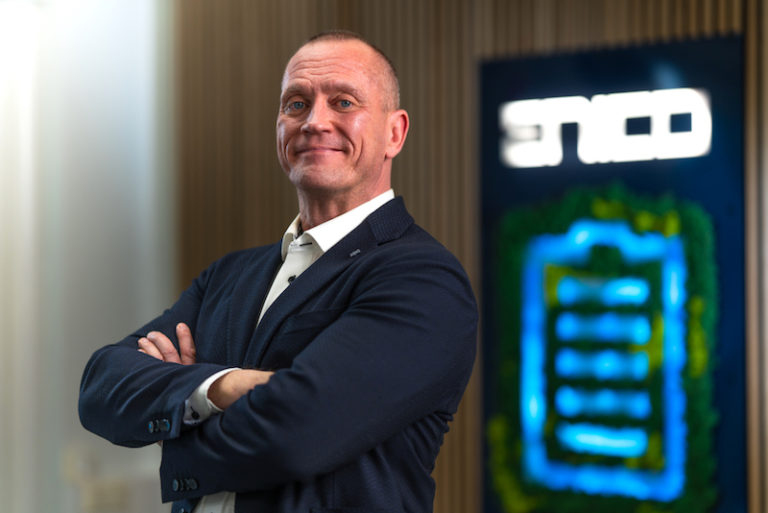
The author of this blog is Marko Lähteenmäki, Enico’s CEO.