BLOG | Topias Koskela
What Is an Energy Storage System – and Why Does It Matter?
A Battery Energy Storage System (BESS) stores electricity when it is abundant and affordable, and discharges it when demand increases. This helps balance load peaks, reduce energy costs, and ease pressure on the power grid. At the same time, the stored energy can be utilized for grid balancing, flexibility markets, or backup power — keeping the system productive at all times.
Managing Charging Power Peaks with Energy Storage
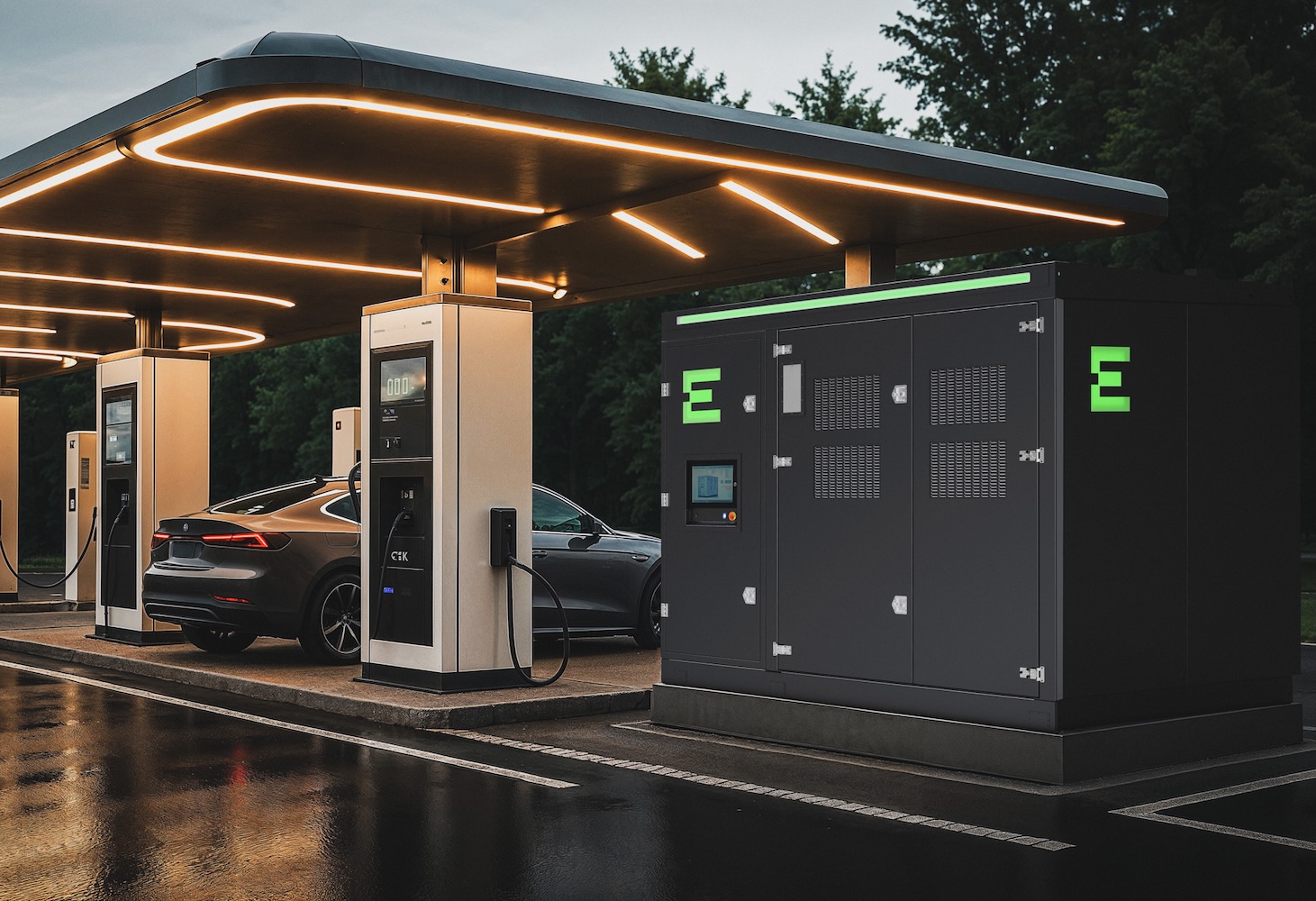
At charging sites — especially in high-traffic locations such as service stations, shopping centers, and logistics hubs — EV charging can create significant power peaks. When several vehicles are charged simultaneously at high power, grid load rises rapidly. As a result, network upgrades can become costly, or charging power may need to be limited.
The benefits of an energy storage:
Reduces power peaks
Lowers grid load
Cuts operational costs
Enables fast charging

Smarter Charging with Renewable Energy
Energy storage systems can also be integrated with local renewable energy sources, such as solar power plants. In this way, a charging site can operate partly self-sufficiently — vehicles can be charged using locally produced renewable energy, improving both sustainability and energy independence.
However, energy storage alone is not enough without intelligent energy management. Enico’s EMS (Energy Management System) optimizes the operation of the storage system in real time. AI-based algorithms and live data monitoring enable the system to automatically optimize charging, energy usage, and costs.
Energy storage systems are no longer a technology of the future — they are today’s solution to the growing demands of electric transport. They are not just an add-on, but a key component of the energy systems of tomorrow, making charging infrastructure more efficient, sustainable, and economical.
Interested?
Get in touch
We lead the way so you can focus on what matters most. We listen, analyze, and recommend energy storage solutions that best serve your business. Let’s design a solution together that meets the needs of tomorrow, today.